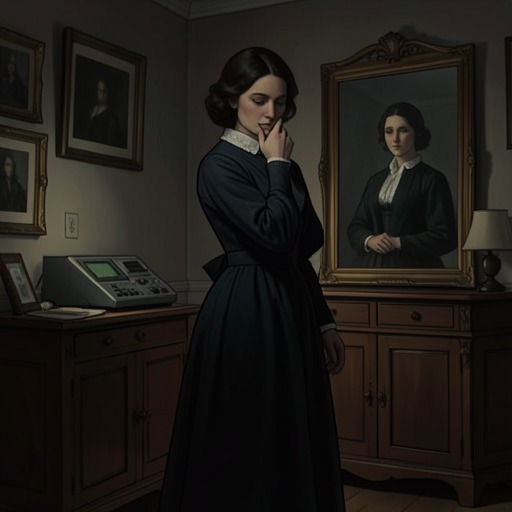
The Marquise de Merteuil’s Widowhood
Les liaisons dangereusesThe Marquise de Merteuil’s widowhood is a turning point in her account of how she acquired independence and fashioned herself for life in society. Her husband’s death frees her from a marriage she describes as tolerable, but the significance of that freedom lies in what she chooses next: not retreat into religious life or family dependence, but a return to the countryside and the deliberate study of conduct, thought, and appearance.
The death of her husband
The Marquise recounts that her husband’s illness interrupted the private studies and observations she had been pursuing at his country residence. She followed him to town, where he had gone for medical help, and he died soon afterward. She says she had no particular grievance against him, yet felt keenly the value of the liberty his death would bring. The contrast is central to her account: a marriage need not be represented as openly miserable for widowhood to appear to her as a coveted release.
Her response is presented as a decision already made in anticipation of that change. She resolves to make use of the freedom widowhood will provide, treating it not as a period of mourning or a passive alteration in status but as the opening of a new course of action. The passage records her own retrospective explanation, addressed to the Vicomte de Valmont, and therefore shows how she narrates the transition as part of her deliberate self-formation.
Refusing the expected paths
The Marquise’s mother expects her to enter a convent or return to live with her. She refuses both arrangements. Her sole concession to propriety is to go back to the same country residence, where she believes she still has observations to make. Her choice defines widowhood through a refusal of the two alternatives presented by family authority: religious withdrawal and renewed dependence in the maternal household.
The return also continues rather than abandons the habits she had begun to develop during marriage. She had learned to hide sensitivity behind apparent coldness and to use an air of youthful thoughtlessness to encourage her husband’s confidence. After his death, she reinforces her observations through reading: novels serve her as a study of social customs, philosophers as a study of opinions, and moralists as a source for what society requires people to think and display. She distinguishes what can be done, what should be thought, and what must appear to be true. Widowhood gives her room to pursue this inquiry without the immediate marital constraint she describes.
Freedom as a practice of self-fashioning
The Marquise does not depict independence as simply being free of a husband. She treats it as a capacity to govern her own presentation. Once she has studied social expectations, she sees outward appearance as the hardest part to control and resolves to master it. Her interest in love, too, is recast as a skill of performance: she says she wants to inspire and feign passion rather than experience it. This account connects widowhood to the persona she later presents, while making clear that the practice of concealment began during her marriage and developed further after it.
Her story therefore sets formal status beside private agency. While married, she describes using apparent insensibility and childishness to secure her husband’s trust; as a widow, she rejects the futures proposed by her mother and chooses the setting and studies that serve her own purposes. The change is not a conversion to a different character so much as the removal of a constraint that lets her pursue existing methods with greater independence.
Social and financial context
The novel’s framing makes the Marquise’s independence legible against expectations about women’s fortunes and life choices. Its prefatory voice mocks the idea that the supposedly enlightened present could contain a young, wealthy woman who becomes a nun, using that claim to question the plausibility of the correspondence. That satirical challenge does not describe the Marquise’s own choice: after her husband dies, she specifically refuses the convent. It does, however, place women’s choices about wealth, marriage, and religious retreat within the book’s debate over social respectability.
The later account of the Marquise’s lawsuit supplies a further, concrete view of the financial world in which she acts. She describes her fortune as unsettled while a major case remains pending, says the case is against minor heirs and their elderly guardian, and plans to take two lawyers with her to the country. The suit is eventually decided against her, with costs, damages, and the return of income awarded to the minors, leaving the remainder of her fortune more than consumed by expenses. These events do not undo the earlier significance of widowhood, but they qualify any simple equation between personal independence and financial security: the freedom she claims for herself exists alongside contested property and consequential legal exposure.